
Indian Home Energy Conservation 2026:
The Zero-Cost Utility Guide
The cheapest unit of electricity is the one you never use. Master your home's efficiency with our 2026 guide to smart habits, heat management, and bill-slashing conservation techniques—all for free.
Zero-Cost Savings Scorecard — Click Any Habit
Saving 1 Unit a Day Can Be Worth
₹3,000 More Than You Think
India's electricity tariff is progressive (tiered/slab-based). Every unit you save doesn't just save that unit's cost—it can drop your entire billing into a cheaper slab. This is the Multiplier Effect that most consumers never realize.
India's Tiered Tariff: How the Slab System Works
| Monthly Units | Rate / Unit | Monthly Bill | Note |
|---|---|---|---|
| 0–100 units | ₹2.50–₹3.50/unit | ₹250–₹350 | UP/Delhi example |
| 101–200 units | ₹4.50–₹5.50/unit | ₹700–₹950 | Incremental cost |
| 201–300 units | ₹6.00–₹7.50/unit | ₹1,300–₹1,800 | Significant jump |
| 301–500 units | ₹7.50–₹9.00/unit | ₹2,600–₹3,300 | Heavy user |
| 500+ units | ₹9.00–₹12.00/unit | ₹4,500+ | Commercial-grade cost |
Passive Cooling: India's Ancient Science
As a 2026 Energy Utility Strategy
Before you run the AC, ask: can I reduce the heat entering my home first? Reducing indoor temperature by just 2°C can cut AC energy consumption by 12–16%.
Cool Roof / White Terrace Wash
Applying white/reflective paint or lime wash to your terrace can reduce indoor temperature by 3–5°C in summer. This directly reduces AC load by 15–25%. Scientific basis: white reflects 80% solar radiation vs 10% for grey concrete.
- Apply 2 coats of white lime wash or SolarGard reflective paint
- Cost: ₹30–₹50/sq ft for reflective paint, ₹8–₹12 for lime wash
- For 600 sq ft terrace: total cost ₹5,000–₹12,000
- Reapply lime wash annually; reflective paint lasts 3–5 years
- MNRE Cool Roof Initiative: government supports this with awareness campaigns
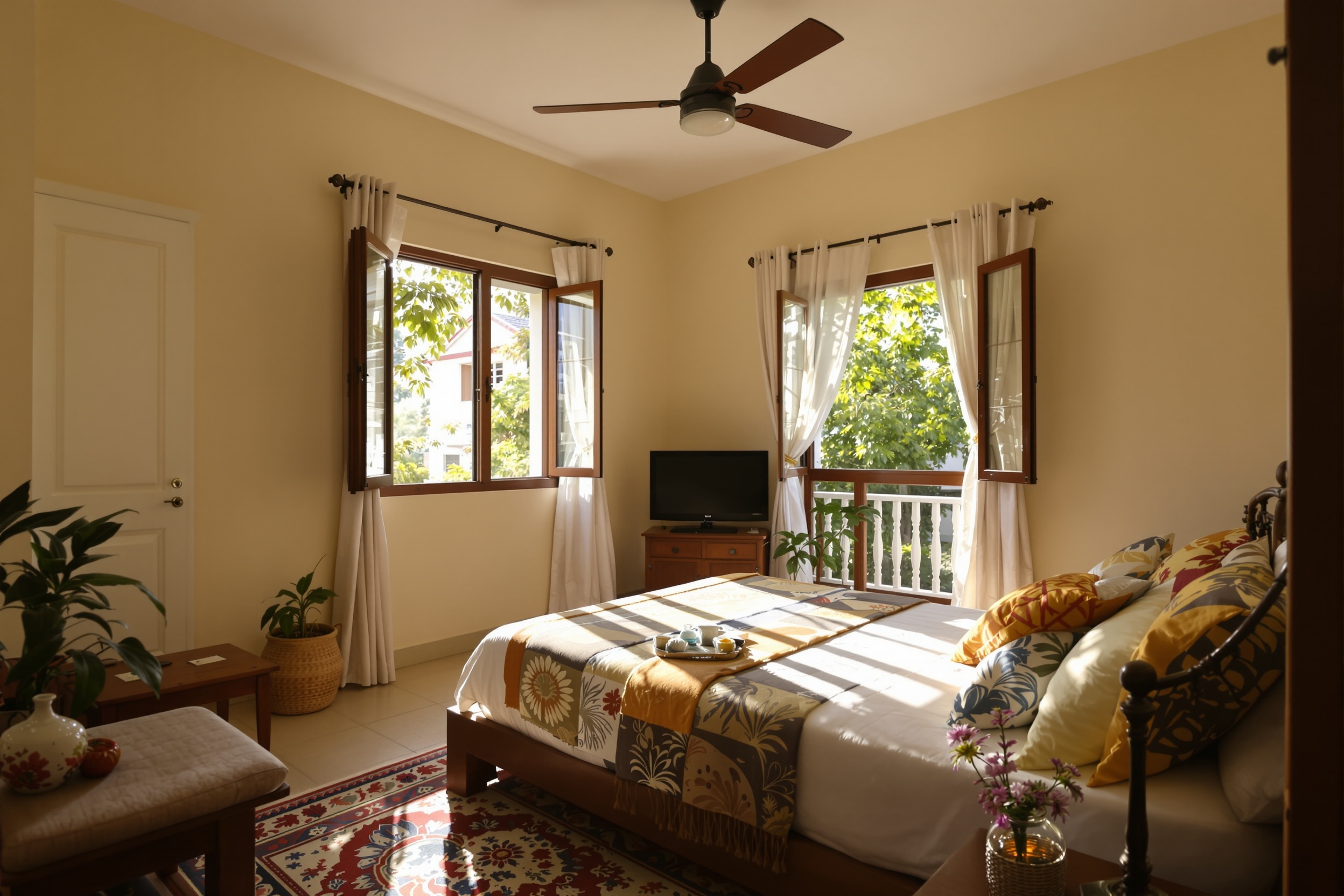
Cross-Ventilation Architecture
Opening opposite windows to create a wind tunnel effect is India's oldest "air conditioner." Effective when outdoor temperature is below 34°C (typically evenings and mornings in summer). Can reduce perceived temperature by 4–6°C through evaporative cooling from body sweat.
- Open windows on opposite sides of the room/house
- Evening timing: 6 PM–9 PM (cooler air enters)
- Morning timing: 5 AM–8 AM (cool air before heat builds)
- Use exhaust fan in kitchen to pull air through the house
- Ceiling fan direction: Counter-clockwise (downward) in summer
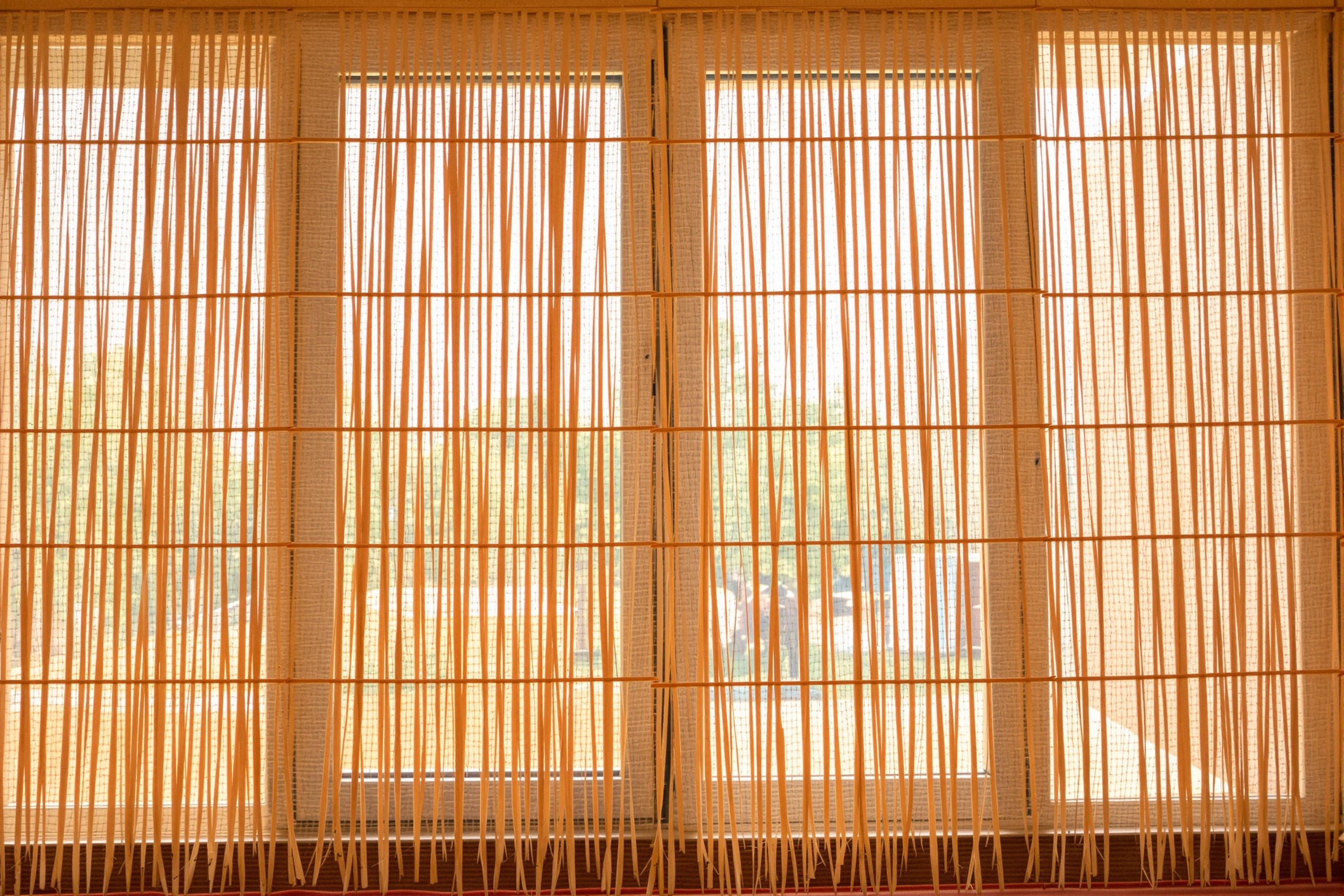
Khus Curtains & Wet Cooling
Khus (vetiver grass) curtains, when kept wet, cool incoming air through evaporative cooling—the same principle as a cooler but using natural materials. Reduces room temperature by 3–4°C in dry climates (North India, Rajasthan, MP). Ineffective in humid coastal areas.
- Hang Khus curtains on west-facing windows (max afternoon sun exposure)
- Sprinkle water every 2–3 hours or connect drip tube
- Works best in cities with Relative Humidity below 60%
- Replace annually (khus degrades after 1 season)
- Add neem leaves to water for natural insect repellent
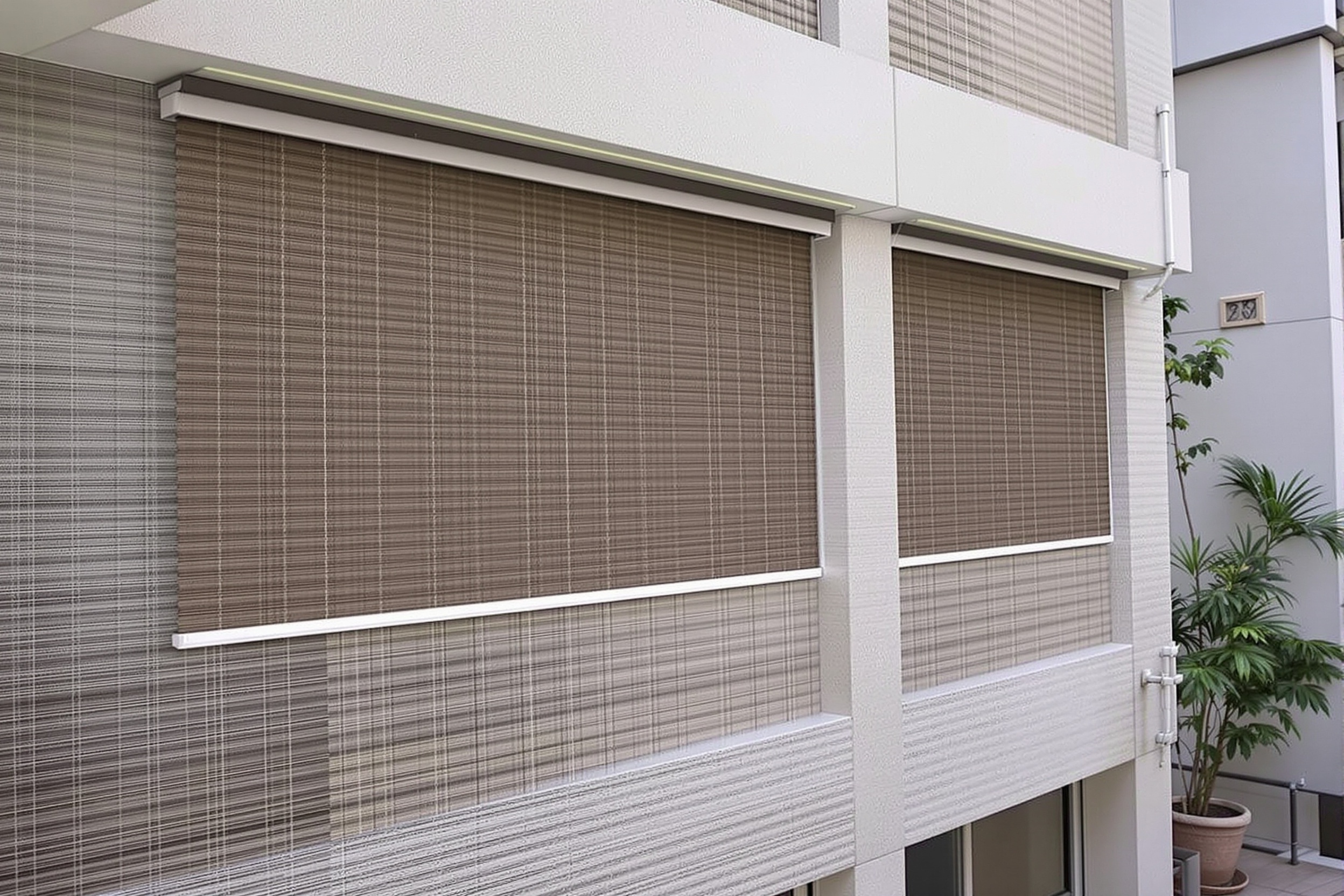
External Shading & Chajjas
External shading (chajjas, bamboo blinds, reflective window film) prevents solar heat gain at the glass stage—before it enters the room. A 3M reflective film on west-facing windows blocks 60–70% of solar heat. Most cost-effective for apartments.
- Install 3M Solar Control film on west and south windows
- Bamboo chick blinds: ₹300–₹600/window, 60% heat reduction
- Terrace plants in pots: natural green shading
- Tinted window glass (for new construction)
- White/silver external blinds > internal dark curtains (heat already inside)
12 Zero-Cost or Low-Cost Changes:
Total Potential: ₹16,044–₹NaN/year
These are not vague tips. Each row below is backed by BEE data, TERI research, or peer-reviewed energy studies on Indian households.
Small Changes, Big Impact — 12 Actionable Conservation Steps
Based on 4-member Delhi family, ₹7/unit| Conservation Change | Category | % Saving | Annual ₹ Saving | Effort | Impact |
|---|---|---|---|---|---|
| Set AC to 26°C instead of 18°C | AC | 20–25% | ₹4,200–₹6,720 | Zero cost | High Impact |
| Clean AC filter monthly | AC | 10–15% | ₹2,100–₹3,360 | 10 min/month | High Impact |
| Set AC fan speed to "Auto" | AC | 5–8% | ₹1,008–₹1,680 | Zero cost | Medium Impact |
| Use AC timer — off 2 hrs before waking | AC | 15–20% | ₹3,024–₹4,200 | One-time setup | High Impact |
| Defrost old frost-type fridge weekly | Fridge | 10–20% | ₹336–₹672 | 30 min/week | Medium Impact |
| Run washing machine only with full load | Washing Machine | 30–50% | ₹336–₹672 | Zero cost | Medium Impact |
| Switch off all standby/phantom loads | Plug | 5–8% of total | ₹840–₹1,680 | Zero cost | Medium Impact |
| Replace remaining incandescents with LED | Lighting | 75% per bulb | ₹672–₹1,260 | ₹50–₹80/bulb | High Impact |
| Use task lighting (only light what you use) | Lighting | 20–30% of lighting | ₹420–₹840 | Zero cost | Medium Impact |
| Reduce geyser temperature to 45°C | Geyser | 15–20% | ₹420–₹756 | Zero cost | Medium Impact |
| Whitewash terrace (cool roof) | Thermal | 15–25% AC load | ₹2,520–₹5,040 | ₹3,000 one-time | High Impact |
| Use pressure cooker instead of open pot | Kitchen | 50–70% gas or energy | ₹168–₹336 | Zero (habit) | Low Impact |
| TOTAL POTENTIAL ANNUAL SAVINGS (all 12 changes) | ₹16,044–₹NaN | Mostly ₹0 | Life Changing | ||
The Slab-Guard Strategy 2026:
Monitor Your Last 5 Days to Save ₹2,000+
The most tactical conservation strategy in India: watch your meter in the last 5 days of the billing month. Staying just 1 unit below a slab boundary can save you ₹150–₹500 in a single month because of how tariff jumps work.
Key Slab Boundaries by State — The Danger Zones
The 5-Day Slab-Guard Playbook
Read your meter or check app
PlanNote current units consumed for the month. Calculate: "I need to stay under [X] units."
Calculate remaining "budget"
ActIf you've used 185 units and target is 200: you have 15 units left for 5 days = 3 units/day budget.
How to Read Your Meter — 3 Ways
Most state DISCOMs have apps (BSES, MSEDCL, TNEB). Check real-time units consumed for current billing period.
New smart meters (being installed across India 2024–26) show current month units on digital display. Press button to cycle readings.
Note the 5-digit reading today vs. first day of month. Subtract = units used so far. Check DISCOM bill start date.
Season-by-Season
Conservation Playbook for India
Each Indian season brings a different energy challenge. Here's the exact strategy for each.
Indian Summer (Mar–Jun)
6 conservation strategies to save money this season
AC at 26°C with ceiling fan
Fan increases perceived cooling; allows 2°C higher AC setting.
Close east windows by 8 AM
Morning sun enters east windows and heats the room before AC starts.
Cook in the evening (6–8 PM)
Cooking heat in the afternoon adds 2–3°C to room; AC works harder.
Cover west-facing windows with reflective film
West sun is most intense (3–6 PM); blocking it reduces peak AC load.
White-wash terrace before May
Roof absorbs maximum heat May–June; pre-wash captures full season benefit.
Pre-cool room to 24°C, then raise to 27°C
Sleep at 27°C after room is pre-cooled; AC cycles less after midnight.
Your 3-Phase Zero-Cost
Conservation Implementation Plan
Don't try to do everything at once. Follow this phased approach and you'll see savings within the first billing cycle.
- Set all ACs to 26°C permanently
- Unplug STB, microwave, chargers at night
- Switch off lights when leaving room
- Use ceiling fan with AC (raise AC temp 2°C)
- Clean AC filter (DIY, 10 minutes)
- Buy 1 PIR sensor for bathroom (₹350)
- Buy 1 smart plug for geyser (₹899)
- Set geyser to 45°C temperature
- White-wash terrace before summer
- Install reflective film on west windows
- Add Khus curtains to hottest rooms
- Install bamboo chik blinds on balcony
Energy Conservation Glossary — 8 Terms Every Indian Household Needs
Billing tier in Indian electricity tariffs. Consuming fewer units keeps you in a cheaper slab, saving money on every unit in that tier—not just the marginal ones.
Electricity drawn by appliances in standby mode. A DTH set-top box uses 8W 24/7 = ₹490 wasted annually. Fixed by switching off at the plug.
Applying white or reflective paint to a terrace to reflect solar radiation. Reduces indoor temp by 3–5°C, cutting AC load by 15–25%.
Opening windows on opposite sides of a room/house to create a natural airflow. Reduces perceived temperature by 4–6°C at zero cost.
Monitoring your electricity meter in the last 5 days of the billing month to stay below a slab boundary and avoid a tariff jump.
Lighting only the functional area in use (desk, reading lamp) vs. illuminating the entire room. Reduces lighting consumption by 20–30%.
Heat a geyser loses to ambient air while idle. Keeping geyser on all morning wastes 0.8–1.2 kWh/day with no benefit to the user.
Using architecture, materials, and natural forces (shading, ventilation, evaporation) to reduce indoor temperature without mechanical energy.
4 Tools That Cut 200,000+ Indian Bills
These products are the most impactful bang-for-rupee upgrades based on our analysis. Combined annual savings: ₹2,400–₹4,800.

Tapo P110 16A Smart Plug
Monitor every appliance's power live
Real-time energy tracking per device
View on Amazon(paid link)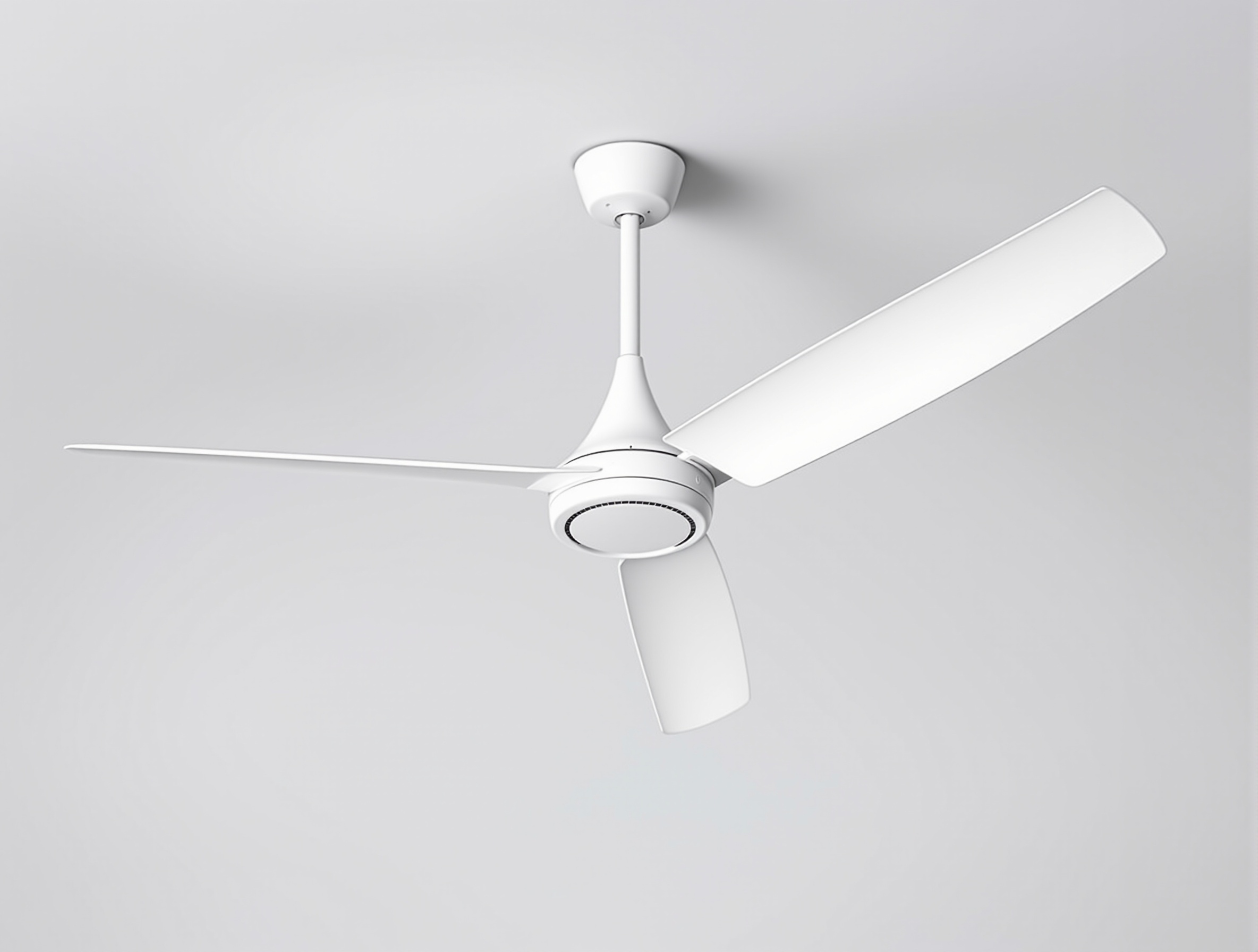
Atomberg Renesa BLDC Fan
Runs on 28W — cuts fan bill by 65%
BEE 5-star · Remote control · Sleep mode
View on Amazon(paid link)
V-Guard iMagno 410
Protect your AC from voltage surges
90–290V wide range · Auto reset · Delay
View on Amazon(paid link)
HomeMate Smart IR Hub
Schedule any AC from your phone
Works with any IR AC · Alexa/Google
View on Amazon(paid link)Amazon Associate Programme · We earn a small commission at no extra cost
Go Deeper — The Conservation Toolkit
Every guide and calculator you need to implement the Zero-Cost Utility strategy
Electricity Bill Calculator
Track your conservation progress—compare this month's bill vs last month with accurate DISCOM slab calculations.
Best AC Temperature Guide
Deep-dive into the data: exactly how much each degree of AC temperature setting costs you per month.
Cool Roof Guide India
Complete guide to whitewashing your terrace: materials, costs, DIY vs. contractor, and ROI by city.
Vampire Power Checklist
25-point standby power audit checklist for every room in your Indian home—with savings for each item.
Energy Conservation — Frequently Asked Questions
Honest, data-backed answers to India's most searched electricity saving questions